
Table
Hello, I’m Dr. Hyo wan Suh, a board-certified plastic surgeon and Medical Director of Lively Plastic Surgery.
One of the most common concerns I hear from patients is:
“My upper eyelids look thick and heavy.”
“Wouldn’t removing some eyelid fat during double eyelid surgery solve the problem?”
“Could my eyes look smaller because of the fullness above them?”
Many people feel that puffy upper eyelids make their eyes appear tired, heavy, or less refined. Because many people believe that excess eyelid fat is the cause, we often receive inquiries regarding eyelid fat removal.
However, there is an important question to consider:
Is eyelid fat truly the cause of upper eyelid fullness? And is fat removal really the right answer?
In this article, I will explain the most common causes of puffy upper eyelids, why fat removal should be approached with caution, and what treatment options may provide a more effective and natural-looking result.
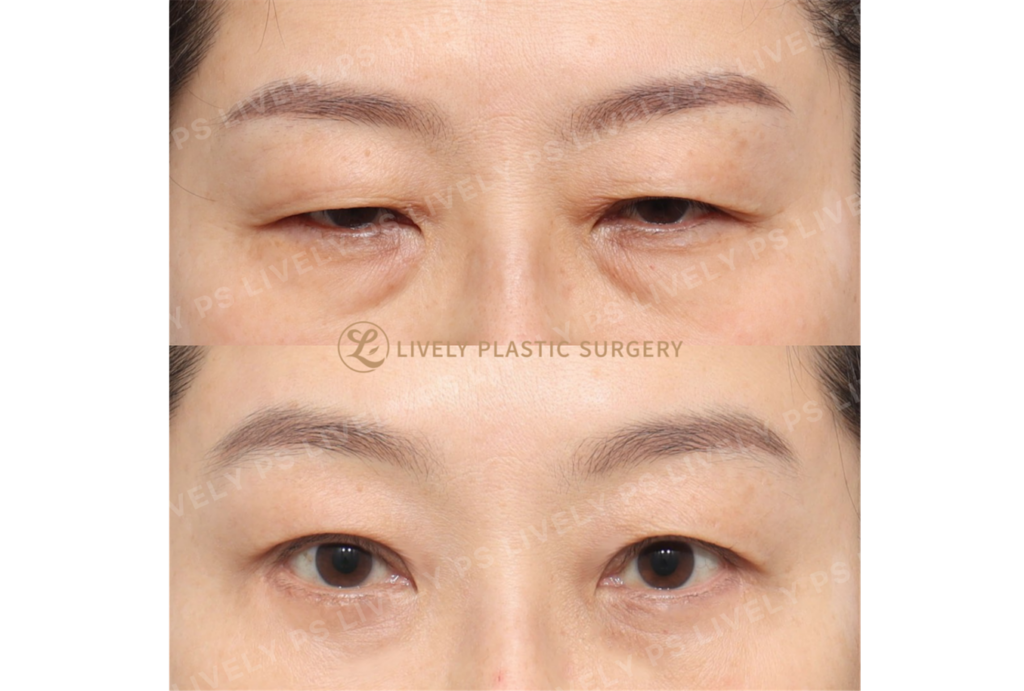
[Scarless Brow Lift, Ptosis Correction, Lower Blepheroplasty, pre / postoperation 2 month ]
Upper Eyelid Fullness Is Rarely Caused by Fat
Many patients assume that thick or puffy upper eyelids are caused by excess fat. In reality, this is not the case for most people.
When the underlying cause is not accurately identified and fat is removed unnecessarily, the natural balance of the eyelid can be disrupted. This may lead to an unnatural appearance and, in some cases, functional problems affecting eyelid movement.
Excessive removal of upper eyelid fat can also create unwanted scar adhesions, resulting in multiple folds or restrictions in the muscles responsible for opening the eyes.
Of course, there are situations in which fat is genuinely the cause. However, these cases are relatively uncommon.
The fat we are referring to is known as orbital fat.
Orbital fat surrounds the eyeball and serves as a protective cushion. Under normal circumstances, structures such as the orbital septum and orbicularis oculi muscle hold this fat in place, preventing it from becoming visibly prominent.
However, orbital fat may protrude when these supporting structures are significantly weakened by aging or when a person is born with naturally weak support tissues. In such cases, a conservative amount of fat removal may be appropriate, but only when clearly indicated.
The Real Cause of Upper Eyelid Puffiness
If fat is not usually responsible, what is the most common cause?
In many patients, the answer is surprisingly simple:
Thickened upper eyelid skin and brow descent.
The appearance of the upper eyelid is closely influenced by the position of the eyebrows. As the brows descend, more skin gathers between the eyebrow and the eyelid, making the upper eyelid appear heavier and fuller.
This condition is often referred to as brow ptosis, meaning a downward displacement of the eyebrows.
Brow ptosis can occur due to both congenital and age-related factors.
Some individuals are born with naturally low or descended brows. Even at a young age, they may experience:
- Upper eyelid fullness
- Hooded eyelids
- Forehead wrinkles caused by constantly raising the eyebrows
Aging can create similar changes. As the brows gradually descend, excess skin accumulates between the eyebrows and the eyes, making the upper eyelids appear bulkier while sometimes creating a harsher or more fatigued appearance.
When upper eyelid fullness is caused by this excess skin redundancy rather than true fat protrusion, scarless brow lift (endoscopic forehead lift) surgery is the most effective solution.
By elevating the brows and forehead, the excess skin is redistributed and unfolded. This can make the eyelids appear lighter and more defined while also creating a softer, more refreshed facial appearance.
Benefits of Scarless Brow Lift Surgery
At Lively Plastic Surgery, we perform brow lift procedures using an endoscope to maximize surgical precision and safety.
An endoscope provides a highly magnified view—up to approximately 50 times greater than what can be seen with the naked eye. Because important nerves and blood vessels are concentrated throughout the brow region, enhanced visualization is a critical component of safe surgery.
Whether we perform a minimally invasive brow lift or a traditional incision-based approach, endoscopic visualization is always utilized.
Because the incisions are small and tissue trauma is minimized, patients generally experience:
- Faster recovery
- Less swelling
- Reduced bruising
- no visible scar on the forehead
Although the procedure may seem straightforward from a patient’s perspective, endoscopic brow lifting is technically demanding. For this reason, it is important to seek treatment from a board-certified plastic surgeon with substantial experience in endoscopic facial surgery.
Key Benefits of Endoscopic Forehead Lift
1. Softening a Strong or Stern Appearance
When the distance between the eyes and the eyebrows is too short, it can give the face a tense or stern appearance. Elevating the brows can help create a softer, more relaxed, and approachable appearance.
2. Improving Upper Eyelid Fullness
As the brows are repositioned upward, the skin that was previously crowded between the eyes and brows is redistributed, making the upper eyelids appear lighter and less bulky.
3. Reducing Forehead and Frown Lines
Many people unconsciously raise their brows to compensate for brow descent. By restoring the brows to a more youthful position, overactivity of the forehead muscles is reduced, which can improve forehead wrinkles and glabellar lines.
4. Improving Eyelid Hooding and Sagging
Elevating the brows can reduce the excess skin that contributes to upper eyelid hooding, helping the eyes appear more open and refreshed.
The Importance of Proper Diagnosis & Surgical Expertise
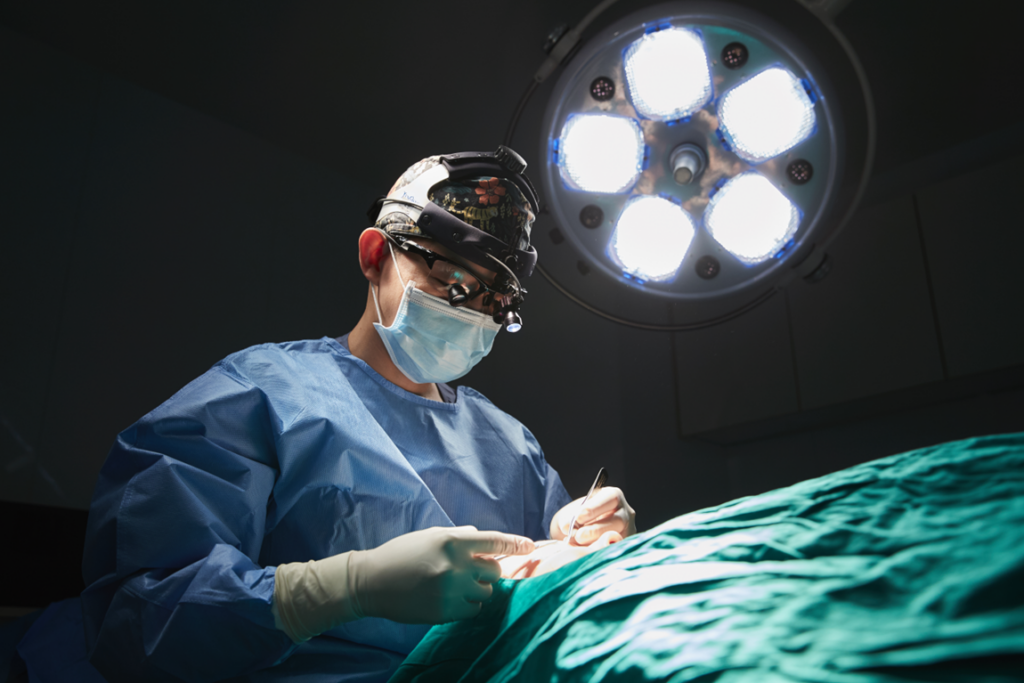
A successful brow lift requires meticulous release of the retaining ligaments and muscles that contribute to brow descent while carefully preserving important nerves and blood vessels.
Because this work is performed within a complex anatomical area of the forehead, surgical experience and anatomical expertise are essential.
At Lively Plastic Surgery, we focus on accurately identifying the underlying cause of upper eyelid fullness and providing treatment tailored to each patient’s specific condition. By developing individualized treatment plans, we aim to achieve both functional improvement and natural-looking aesthetic results.
If you are concerned about heavy or puffy upper eyelids and would like a professional evaluation, we would be happy to help.
Thank you.