
Hello, I’m Hyo-Wan Suh, MD, Board-Certified Plastic Surgeon and Medical Director of Lively Plastic Surgery.
“My under-eye area looks hollow and tired.”
“Wouldn’t my eyes look brighter if the bulging fat were removed?”
“My lower eyelids sag so much that I look older than I am.”
These are some of the most common concerns we hear from patients.
Bulging under-eye fat, deep tear troughs, and loose lower eyelid skin are very common signs of aging.
Lower blepharoplasty is one of the most effective surgical solutions for these concerns and is especially popular among patients in their 40s and beyond.
However, there is a very common misconception about lower eyelid surgery—
that “removing fat alone is enough.”
This misunderstanding can lead to suboptimal results and, in some cases, unwanted complications.
In this article, I’ll explain who is a good candidate for lower blepharoplasty, the surgical techniques we use, the expected benefits, and the important points you should know before surgery.
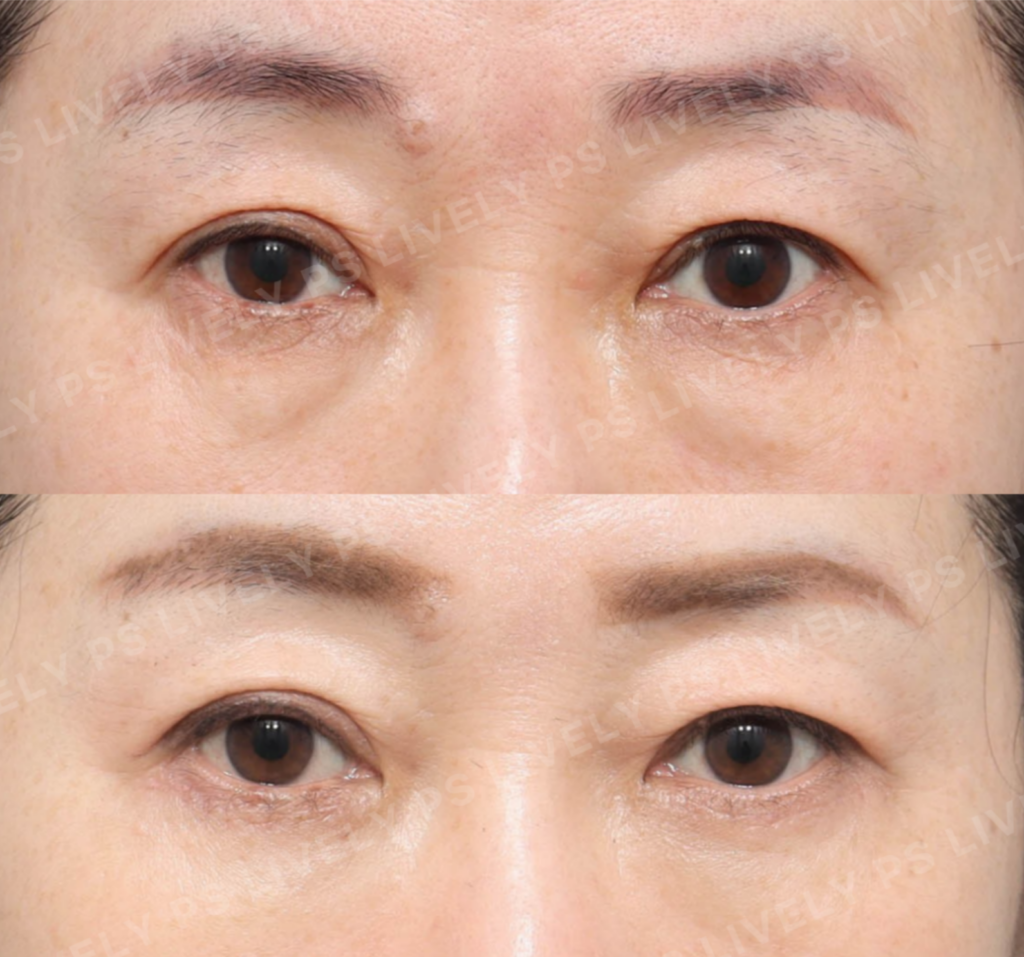
What Is Lower Blepharoplasty?
Lower blepharoplasty is a surgical procedure designed to improve:
- Sagging lower eyelid skin
- Protruding under-eye fat
- Fine wrinkles
- Deep tear troughs and under-eye hollowness
The procedure is performed through a precise incision just below the lash line.
During surgery, protruding fat is repositioned into hollow tear trough areas, while loose skin and muscle are carefully lifted and tightened.
Earlier generations of lower eyelid surgery focused mainly on excessive fat removal and skin excision, which often resulted in a flat or hollow appearance over time. These techniques had clear limitations.
Our Advanced Surgical Approach at Lively Plastic Surgery
At our clinic, we go beyond surface-level correction by addressing the deeper supporting structures of the lower eyelid.
We focus on two key techniques:
1. Orbicularis Oculi Muscle Adjustment
The orbicularis oculi muscle is the muscle that surrounds the eye and allows blinking.
As we age, this muscle weakens and loosens, contributing to deep wrinkles and sagging.
Simply tightening the skin cannot adequately correct this issue.
By lifting and reinforcing the muscle layer, we achieve:
- More natural tension
- Better elasticity
- Longer-lasting results
In other words, we perform a dual-layer lift—both skin and muscle—for greater stability and refinement.
2. Lateral Canthal Support (Outer Corner Stabilization)
The lateral canthus, or outer corner of the eye, plays a critical role in eyelid stability.
During lower blepharoplasty, lifting the skin and muscle can place downward tension on the lower eyelid.
Without proper support, this may lead to complications such as lower eyelid retraction or ectropion (outward turning of the eyelid).
To prevent this, we reinforce the cartilaginous support at the outer corner of the eye, ensuring:
- Proper eyelid position
- Natural eye shape
- Long-term safety
This preventive step is especially important in middle-aged and older patients.
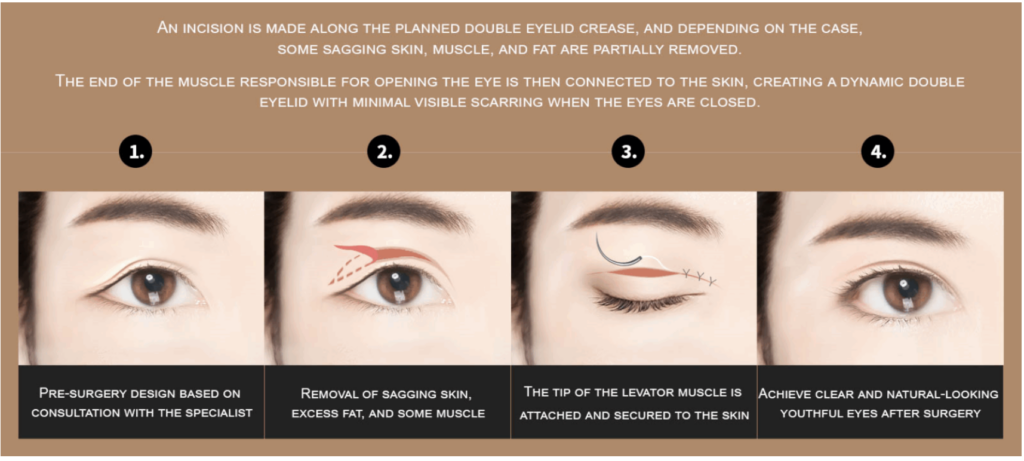
Why “Just Removing Fat” Is a Mistake
Many patients believe that under-eye concerns can be solved simply by removing bulging fat.
In reality, over-removal of fat often causes:
- Hollow or sunken under-eye appearance
- Deeper wrinkles over time
- A prematurely aged look
As we age, under-eye fat naturally diminishes. Removing too much can leave the area looking like a deflated balloon.
At Lively Plastic Surgery, we prioritize fat repositioning rather than aggressive removal—redistributing the fat into hollow tear troughs to restore balance and smooth contours.
In cases where fat volume is truly excessive, minimal removal may be necessary. Even then, we carefully account for natural postoperative fat absorption and always aim for conservative correction.
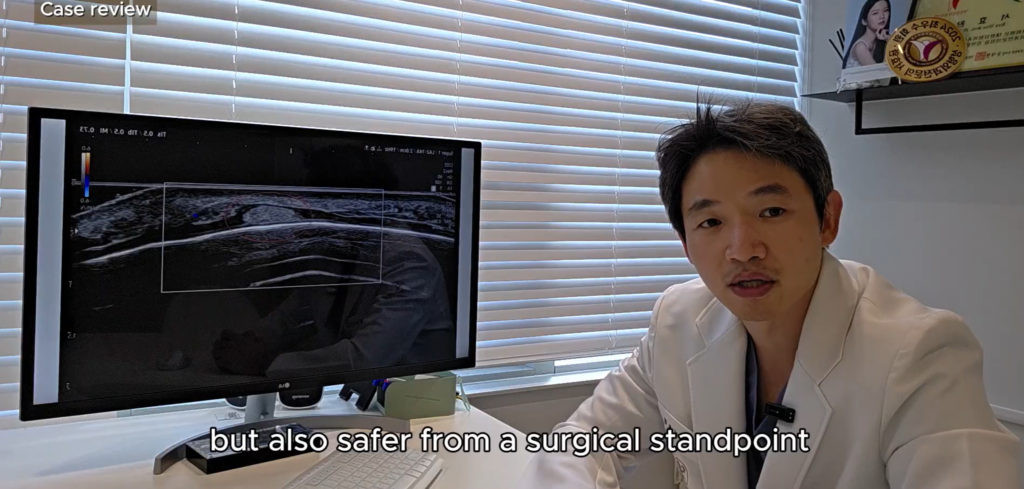
Preserving the “Aegyo-sal” (Natural Under-Eye Fullness)
One of the most common concerns patients express is:
“Will my aegyo-sal disappear after surgery?”
Aegyo-sal—the soft, natural fullness that appears under the eyes when smiling—plays an important role in youthful and warm facial expression. It is closely related to the orbicularis oculi muscle.
If this muscle or its nerves are damaged during surgery, aegyo-sal can weaken or disappear, leading to an unnatural look.
Because the incision in lower blepharoplasty is close to this muscle, meticulous surgical technique is essential.
At our clinic:
- We carefully preserve the muscle and surrounding nerves
- When appropriate, we even reinforce the muscle so that the aegyo-sal remains visible—or appears more natural—after surgery
This level of precision comes from extensive experience with eye surgery and middle-aged facial rejuvenation.
Considering Lower Blepharoplasty?
Lower eyelid surgery can significantly enhance your appearance and restore confidence—but there is no one-size-fits-all approach.
Surgical planning should be tailored based on:
- Facial bone structure
- Skin quality
- Fat distribution
- Muscle tone and elasticity
For this reason, it is essential to consult with a highly experienced, board-certified plastic surgeon who specializes in lower eyelid and rejuvenation surgery.
Lower Blepharoplasty Is Especially Recommended If You:
- Have thin, sagging lower eyelid skin with wrinkles
- Appear tired or older due to protruding under-eye fat
- Have deep tear troughs that create dark shadows under the eyes
If you have additional questions or would like a personalized consultation,
you are always welcome to contact Lively Plastic Surgery.
We believe in careful evaluation, honest guidance, and refined surgical results.
Thank you for taking the time to read this article.